
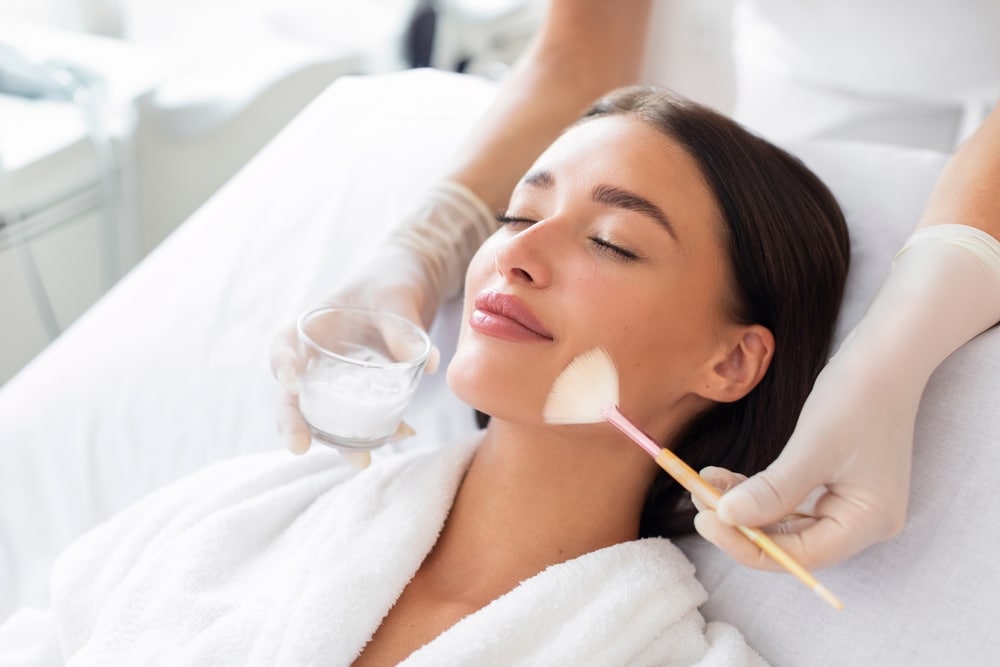
At Skin & Beauty Center of Los Angeles, chemical peels are offered as part of their cosmetic dermatology services. With multiple dermatology locations, our team of experienced providers can help you choose the right peel depth and guide you to healthy, clear skin.
What Determines How Much You Peel?
Your peeling intensity is influenced by:
- Peel depth (light, medium, or deep)
- Your skin type and sensitivity
- Your skincare routine before and after treatment
- The peel solution used (glycolic, salicylic, TCA, etc.)
Light peels usually cause minimal flaking, while medium peels can cause noticeable peeling in sheets, especially around the mouth and nose.
Chemical Peel Healing Timeline (Day-by-Day)
Day 1: Tight, Warm, Slightly Red
Your skin may feel like a mild sunburn. Most people notice redness and tightness, but not peeling yet. Hydration is essential.
Day 2: Dryness Sets In
Your skin begins to feel drier and rougher, and makeup may not sit smoothly. Some patients see tiny flakes, but it’s still early.
Day 3: Peeling Begins
This is typically when visible peeling starts, often around the mouth, chin, and nose. You may notice light flaking or small patches.
Day 4-5: Peak Peeling
This is the “big peel” stage for many. Skin may peel in larger sections, especially after a medium peel. It can be obvious, so you may want to avoid major social events at this time.
Day 6-7: Peeling Slows
Most peeling tapers off by the end of the week. Your skin may still feel sensitive, but it’s usually smoother and brighter.
How to Care for Peeling Skin
The right aftercare can ensure optimal results:
- Use gentle cleanser and thick moisturizer
- Apply broad-spectrum SPF daily
- Don’t pick, scrub, or exfoliate early
- Avoid retinoids and acids until approved
Get Healthy Skin with a Chemical Peel in Los Angeles, CA
Peeling after a chemical peel can range from barely noticeable to very visible, especially mid-week. The key is to protect your healing skin. Call us today at 877-822-2223 to schedule a consultation.
